Runs on your local Claude Code.
Pedagogue runs using your local authenticated Claude Code.
Pick the model and how hard it thinks for each journey.

OpusSonnetHaiku
LowMedHighxHighMax
Pedagogue turns your AI agent into a teacher. Ask about anything and it builds you a journey: a story dotted with color, visuals, interactive figures you can play with, and sidebar conversations to follow your curiosity.
Coming soon for Mac. Private beta by invite.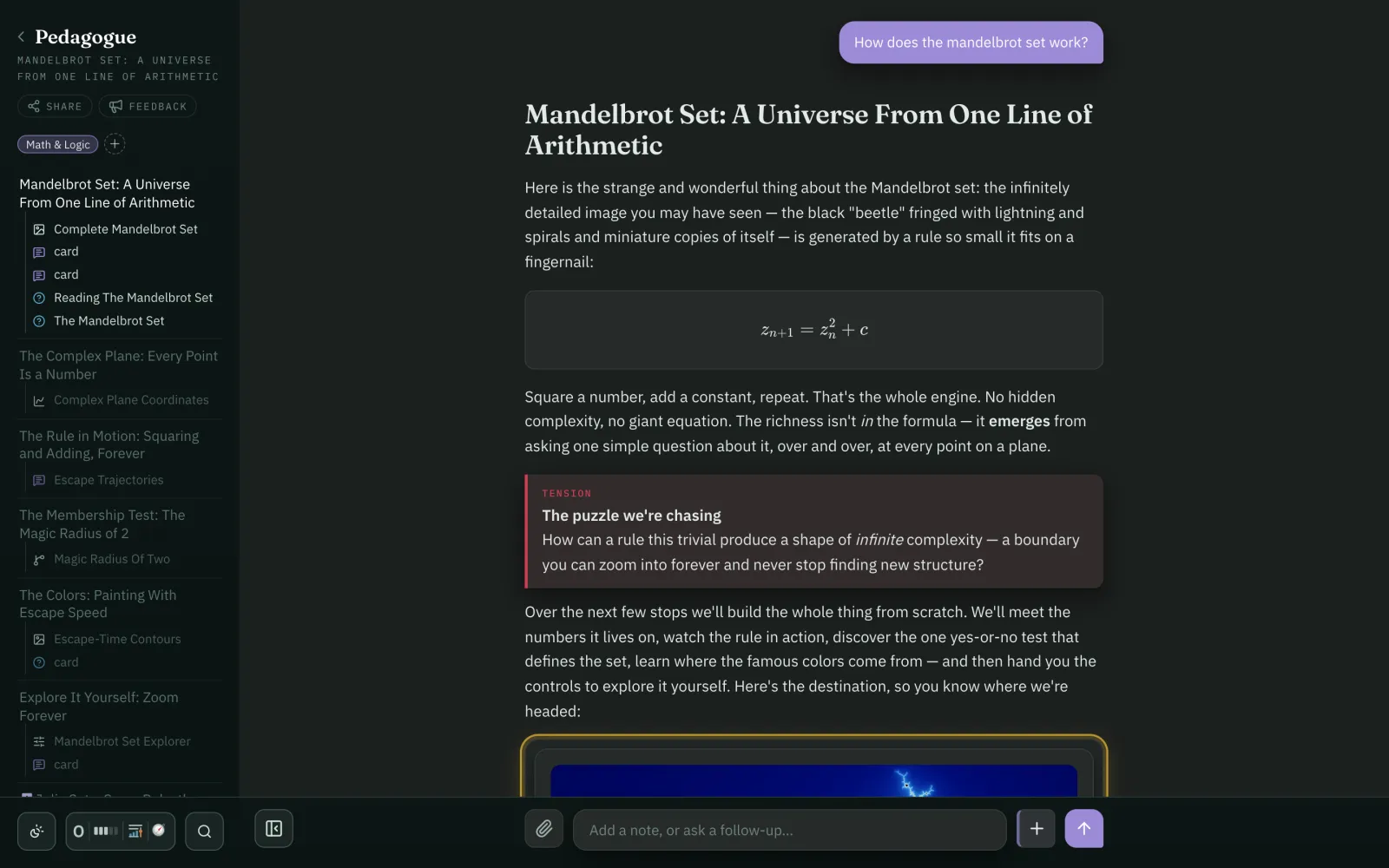
One question in.
A whole journey out.
Chat gives you a wall of text and a scroll bar. Pedagogue gives you a vibrant journey to explore and learn from.
Guided journeys
Every answer is shaped by one idea: people learn best from stories. Journeys start simple, keep you oriented, and layer on the detail as you go deeper.
Type a question — any question. Pedagogue answers with a journey: a titled, ordered path through the idea, written for you.
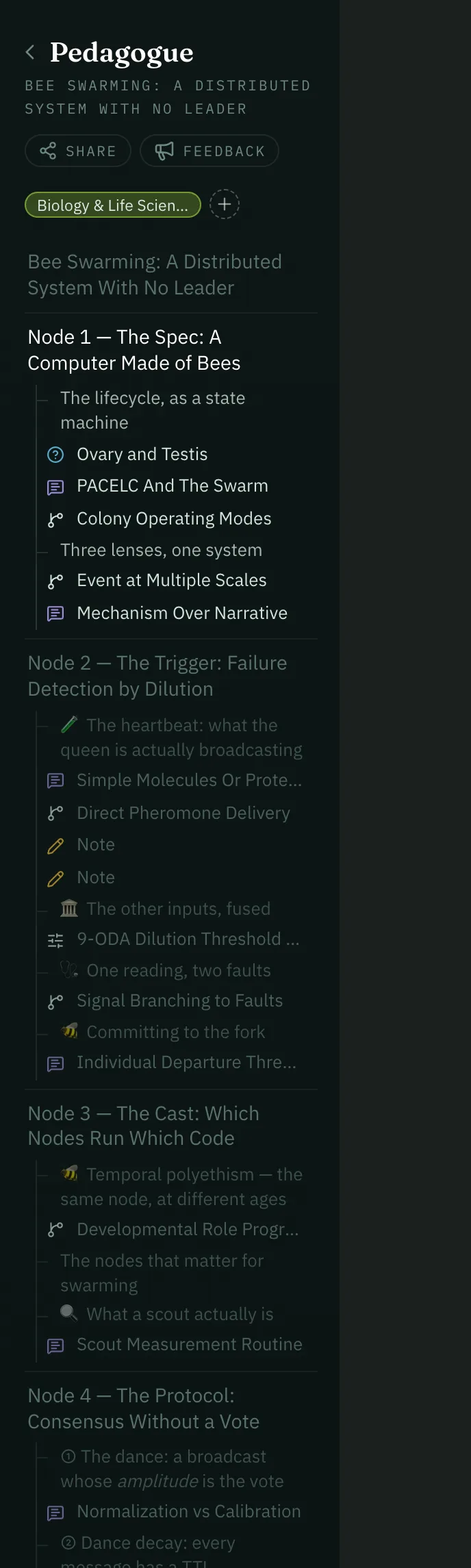
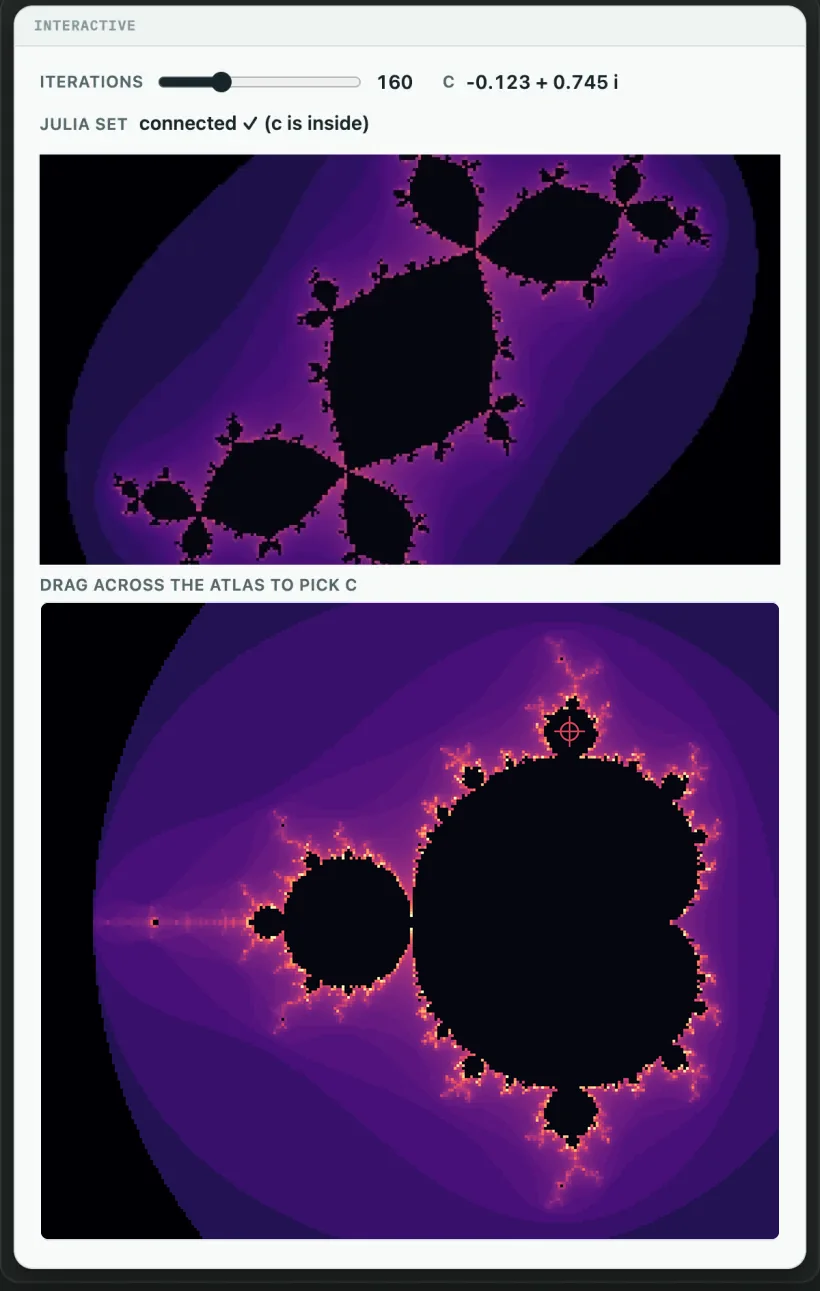
Each journey starts from the smallest true thing and the puzzle it leaves behind, then builds. Here one line of arithmetic, and a question: how can that draw something infinitely detailed?
The map on the left shows every stop on the trail: where you've been, where you are now, and how far is left. Tap any waypoint to jump straight there.
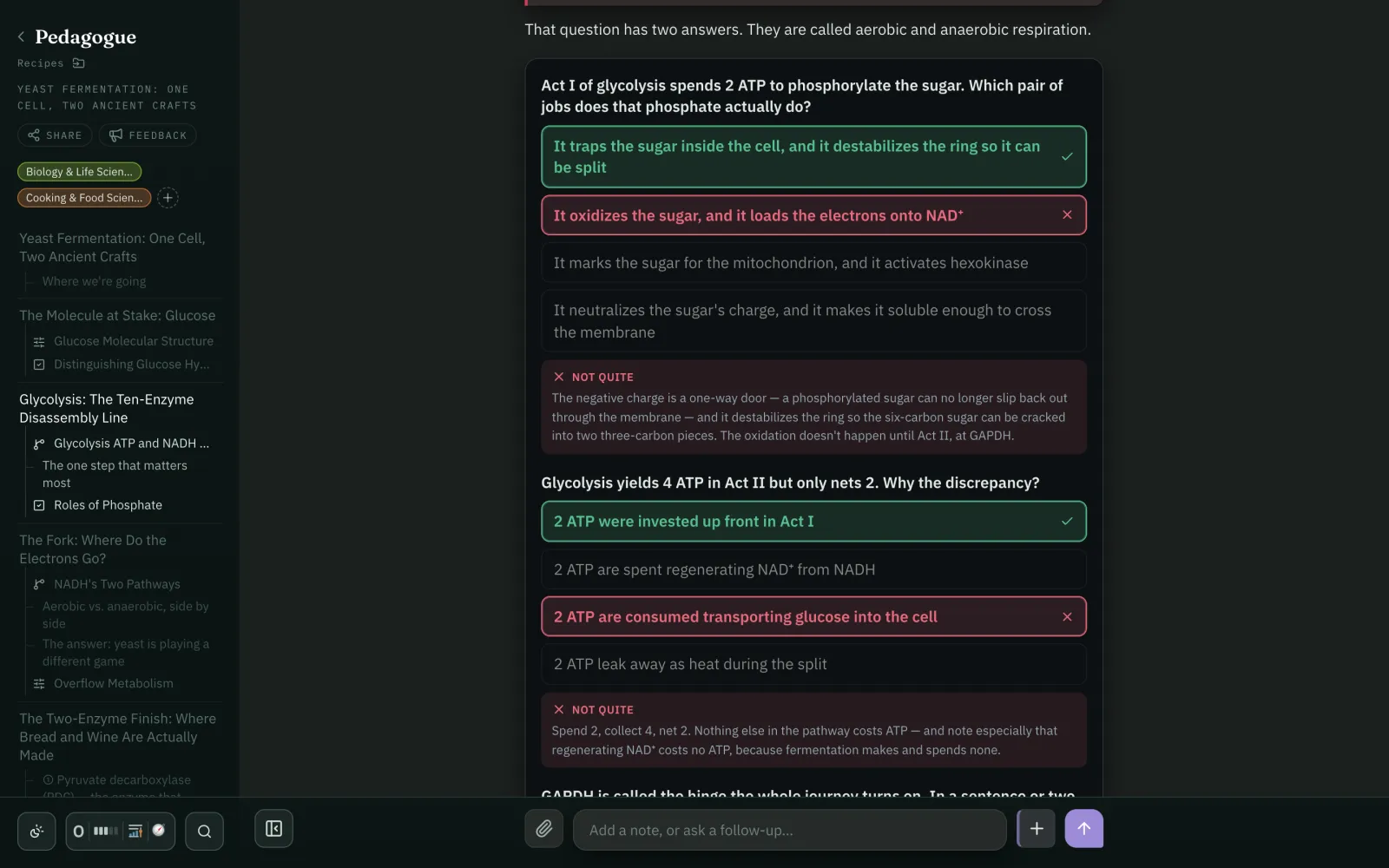
Ask to be quizzed on a section, a figure, or the whole journey. Multiple choice is graded on the spot, every miss comes with the reason, and short answers are read and graded by the agent.
Don't just tell. Show.
When a picture carries the idea better than a paragraph, Pedagogue draws it — and brings it to life.
Rich visuals
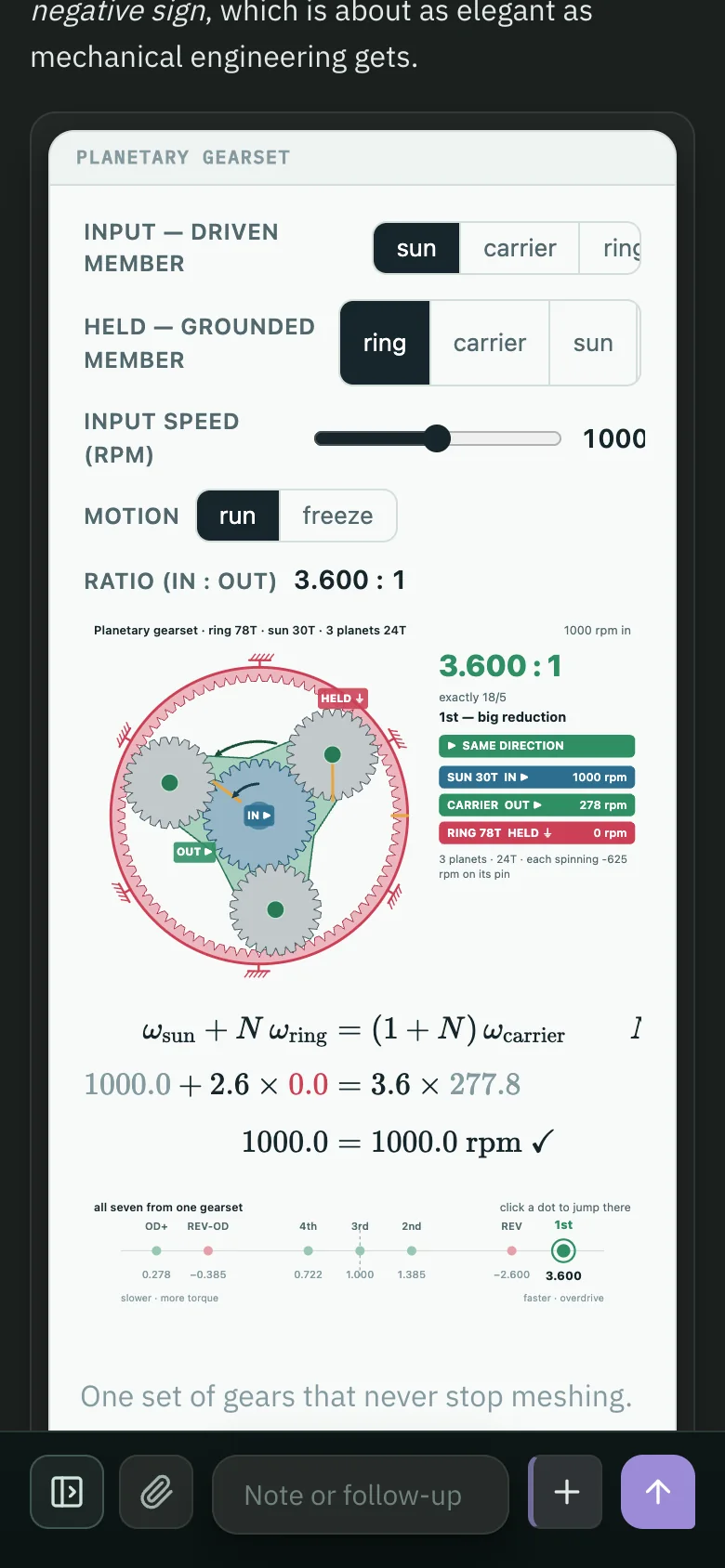
Equations, charts, diagrams, maps, 3D scenes and working interactive figures appear in context, connected to the surrounding text.
Pedagogue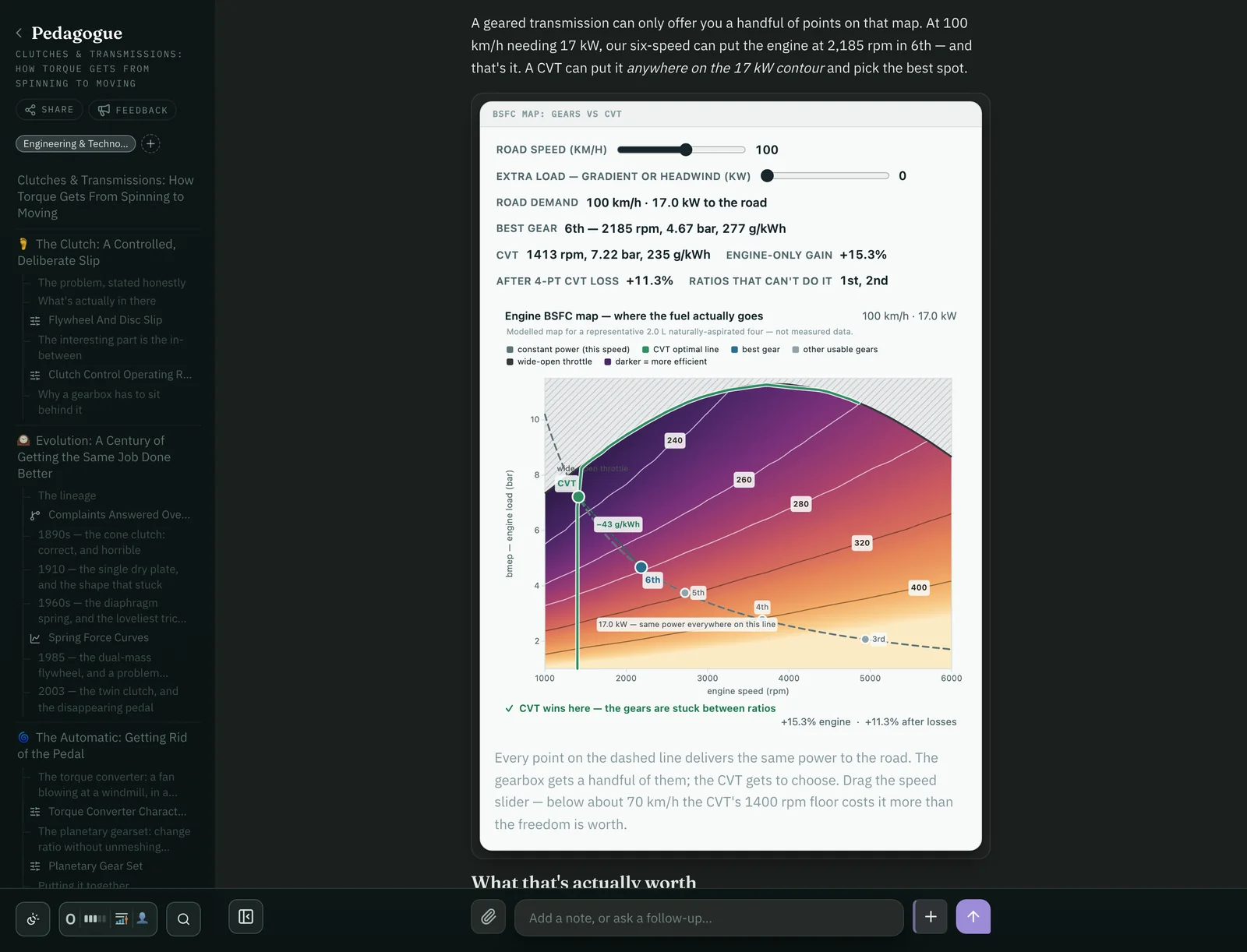
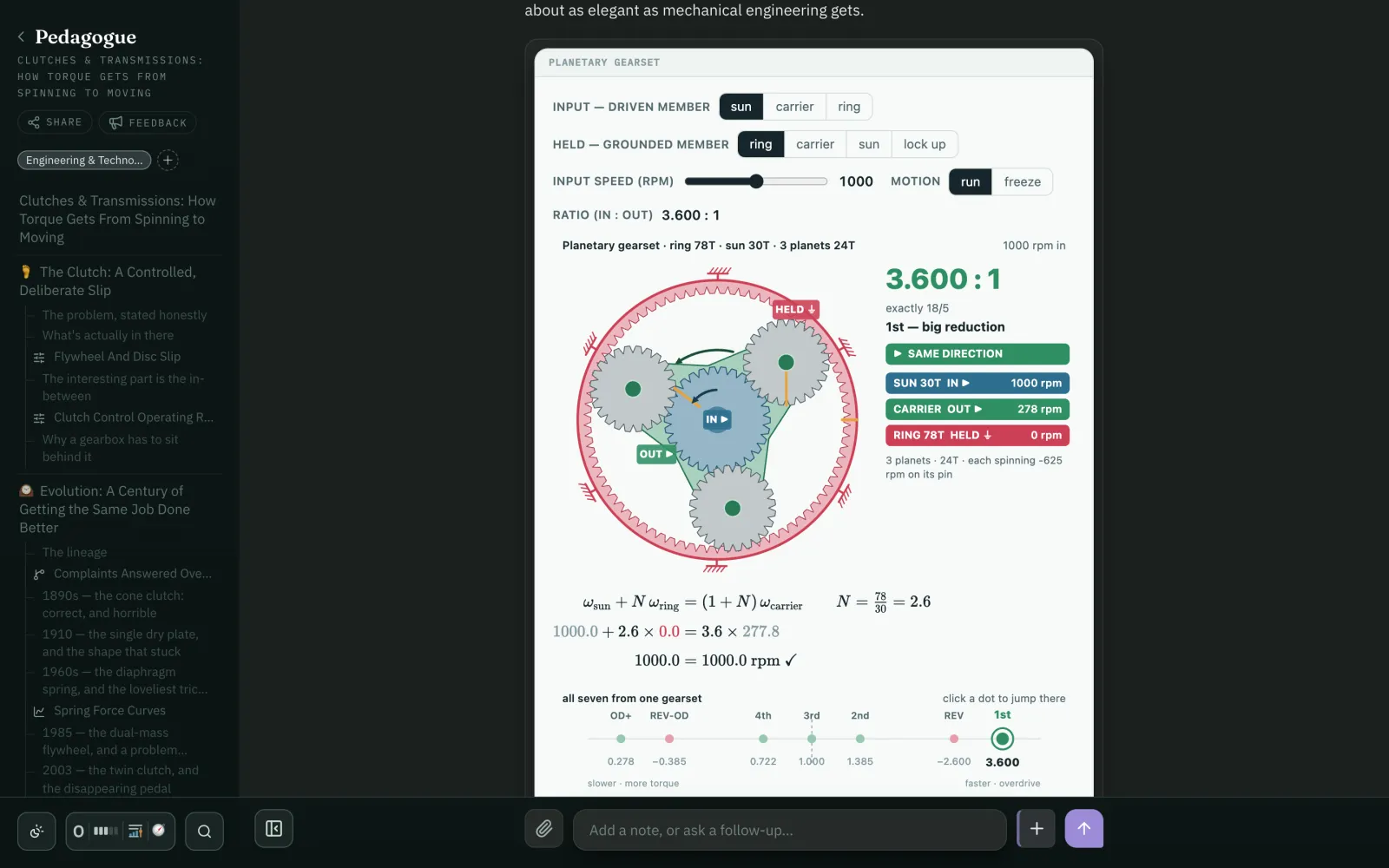
A journey on clutches and transmissions, reaching the question of why a CVT can beat six fixed gears on fuel.
Why do spinning baseballs curve in flight? Explore how spin affects air flow.
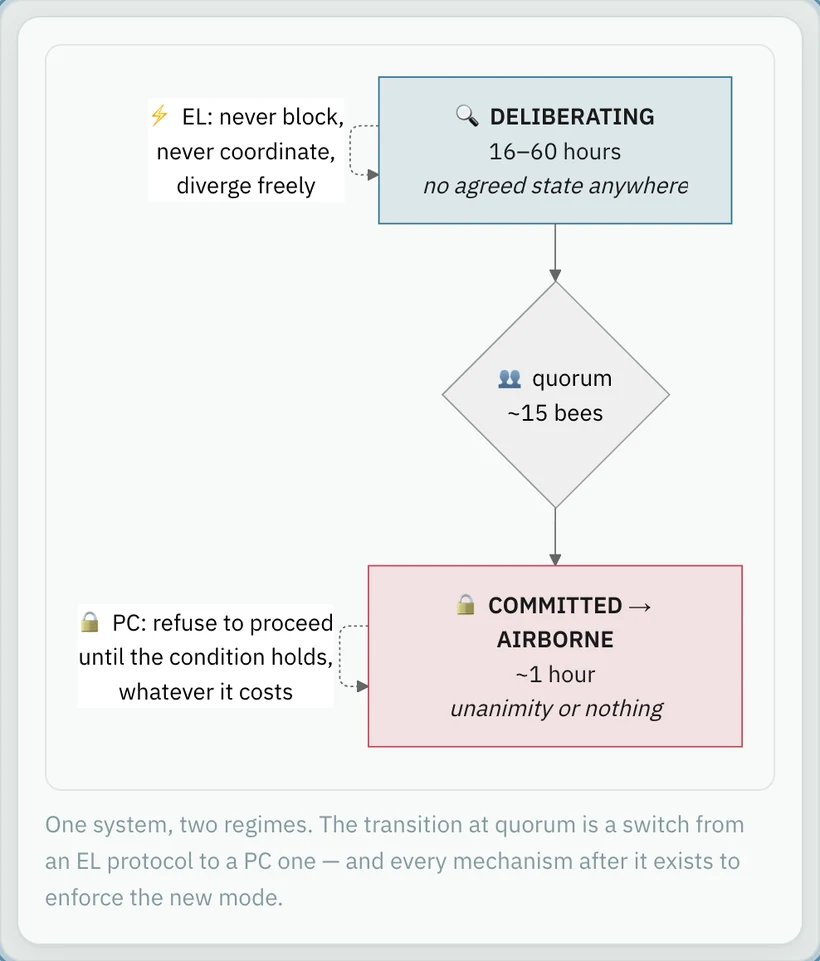
A lesson on swarming bees. With a parametrized simulation showing how a small number of informed bees can guide a colony to its new home.
A journey through Yugoslavia's fragmentation. Pedagogue fetches information instead of remembering it. And with Python installed Pedagogue can (optionally) compute values to make sure it gets them right.
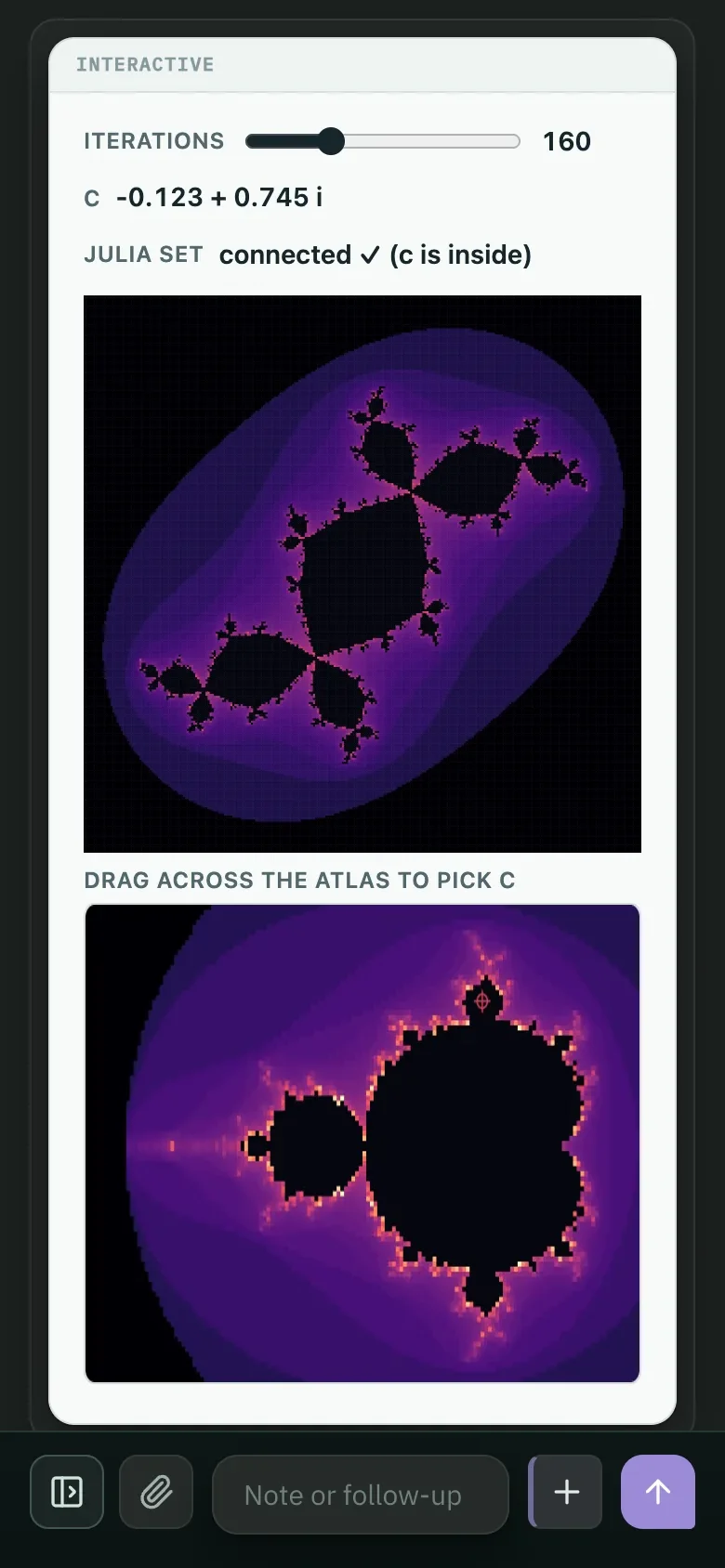
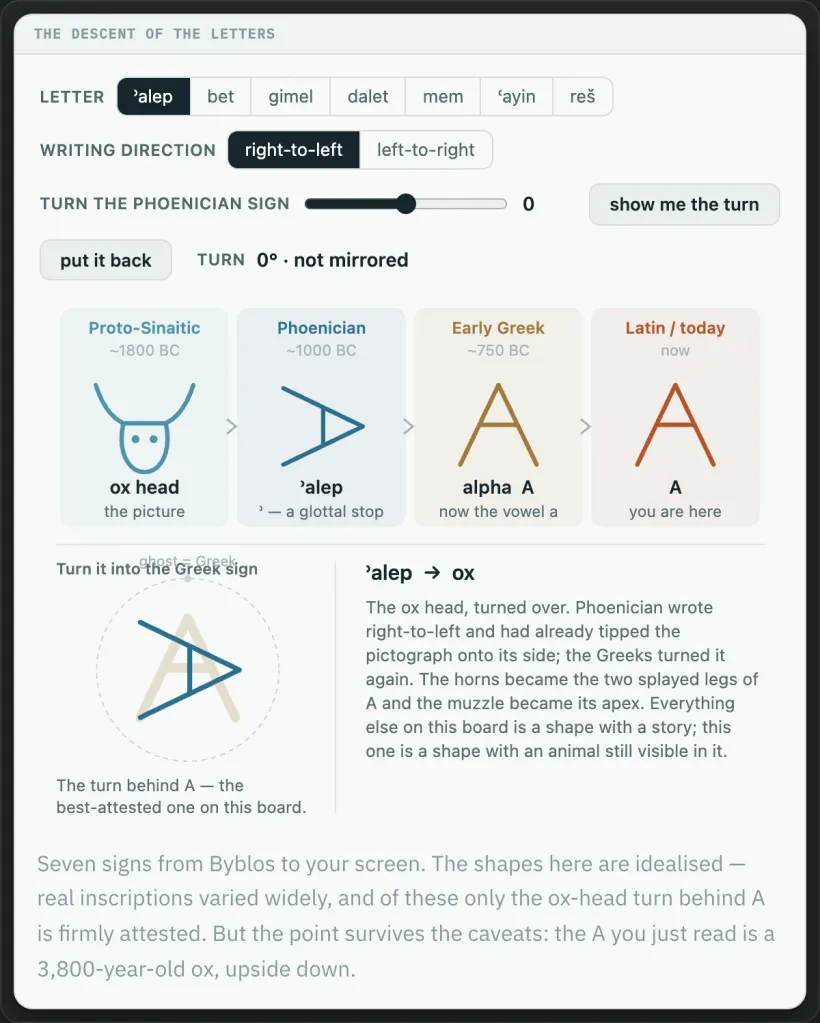
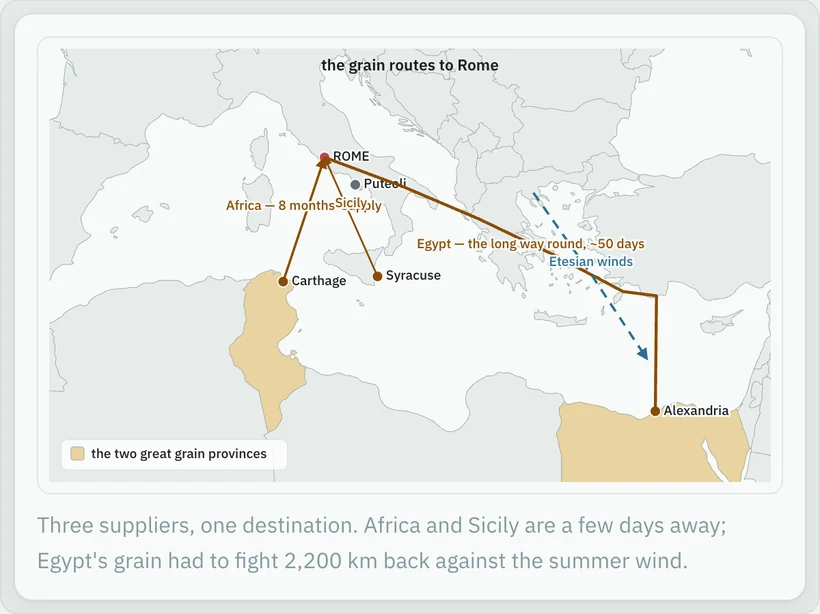
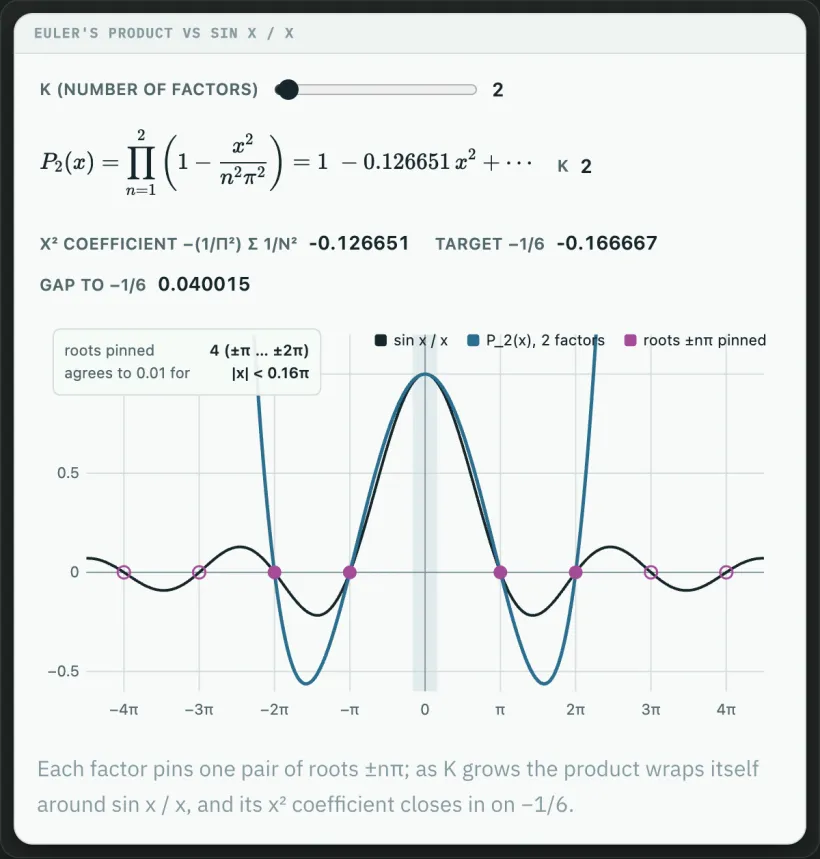
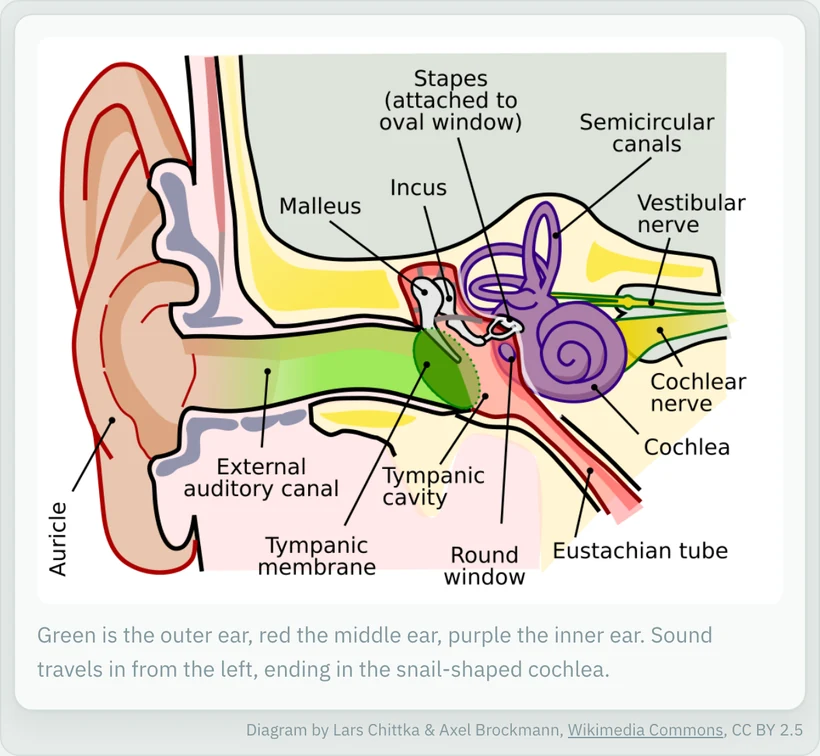
A few figures from real journeys. Each one was written for a single lesson, and each one moves.
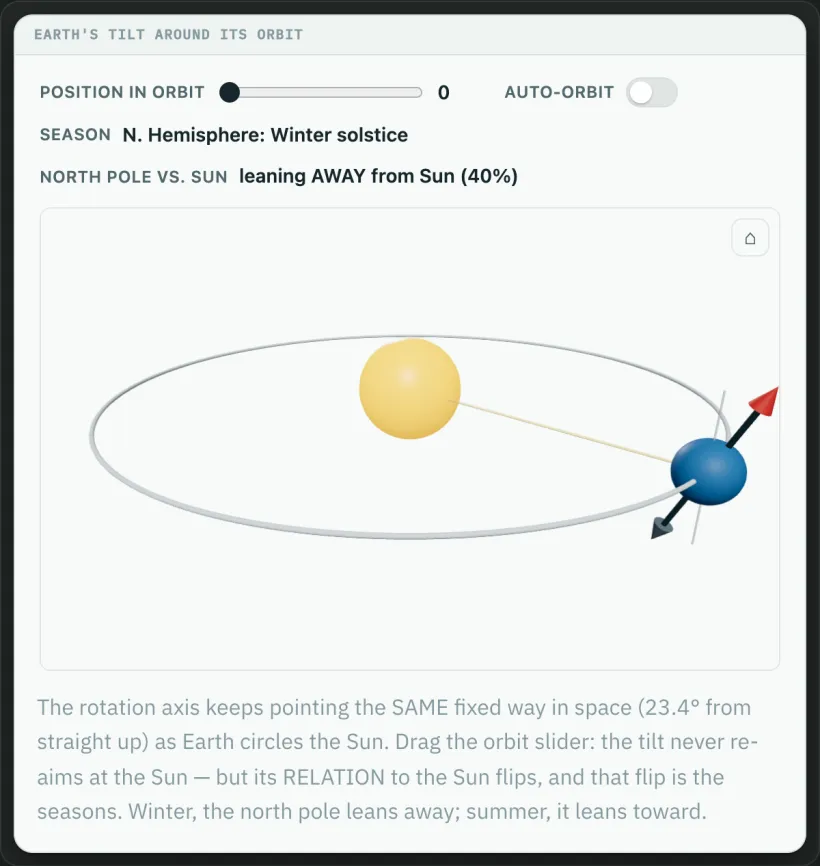
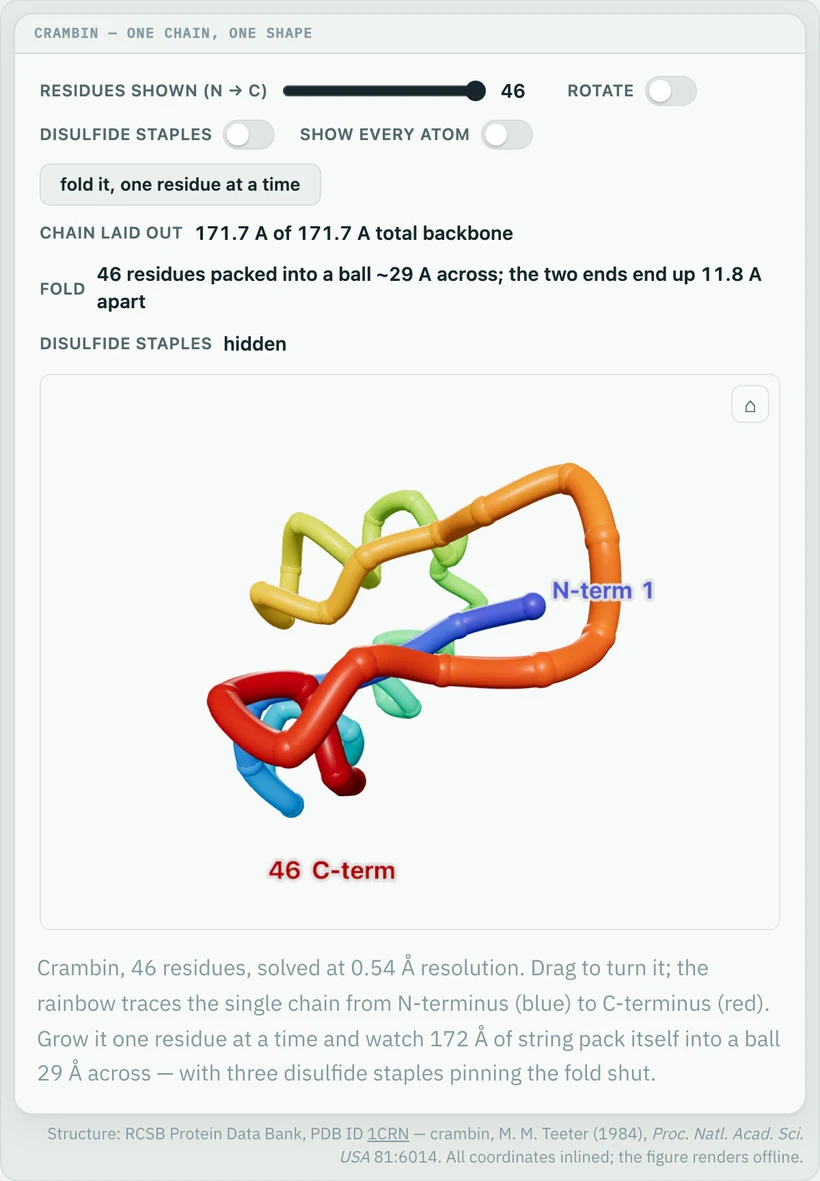
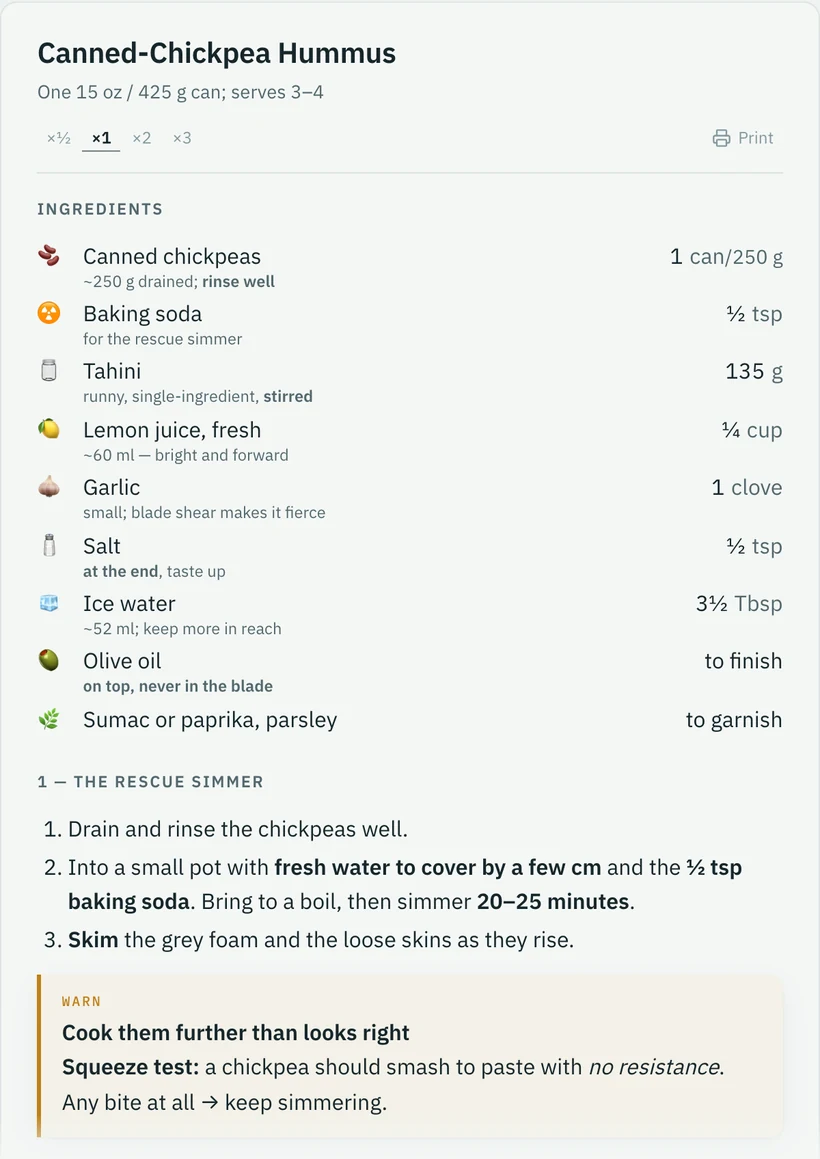
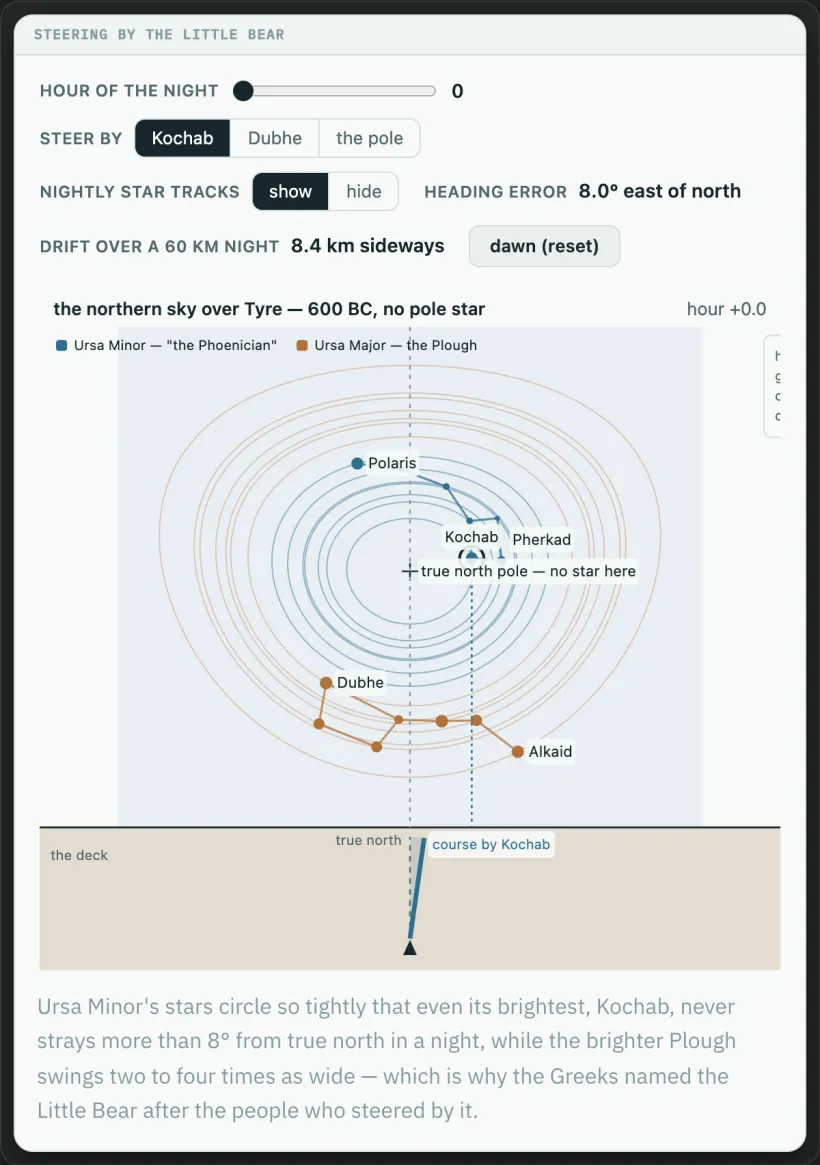
Take every tangent.
Never lose the thread.
Sidebar conversations
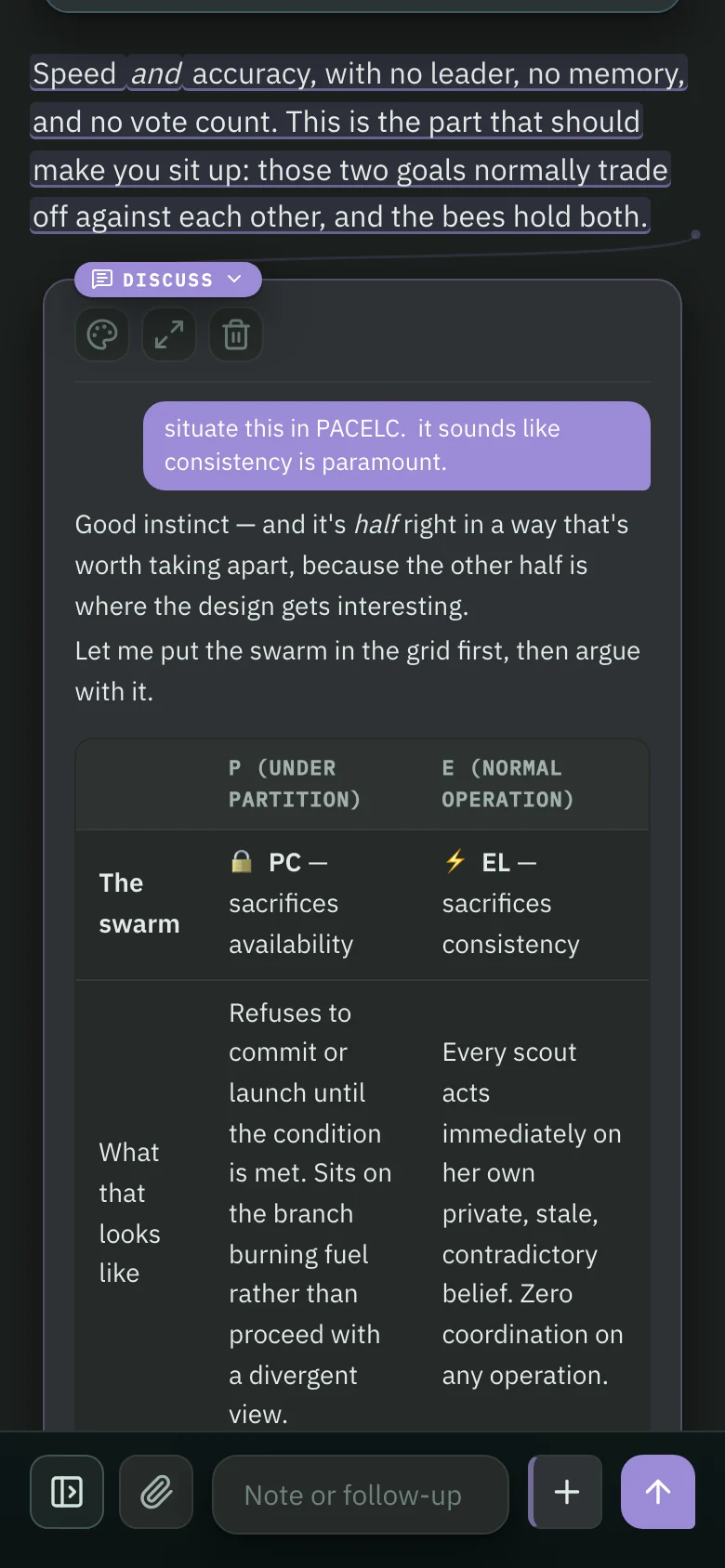
Curiosity doesn't follow an outline. Pedagogue lets you chase the question that just occurred to you without derailing the lesson you're in.
A small toolbar lets you Highlight, Define or Discuss.
Define gives a short, exact definition. Discuss opens a side conversation about that passage.
Tethered to the words you chose, with room for follow-up questions.
The lesson waits exactly where you left it.
Here is the constraint that shaped everything else. A Roman merchantman carried a big square sail, and a square sail is superb with the wind behind it and nearly useless in front of it. Reconstructions and ancient voyage times agree:
close-hauled, these ships made less than 2 to 2½ knots — walking pace, and that is before you subtract leeway.
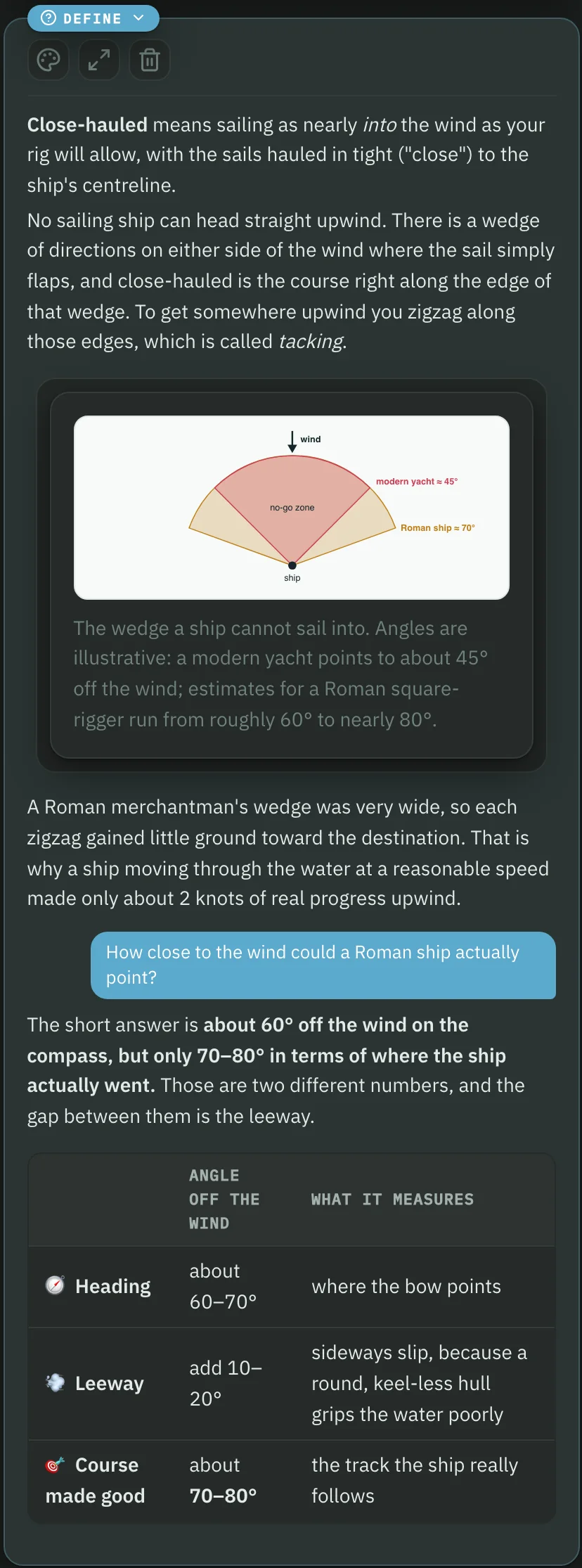
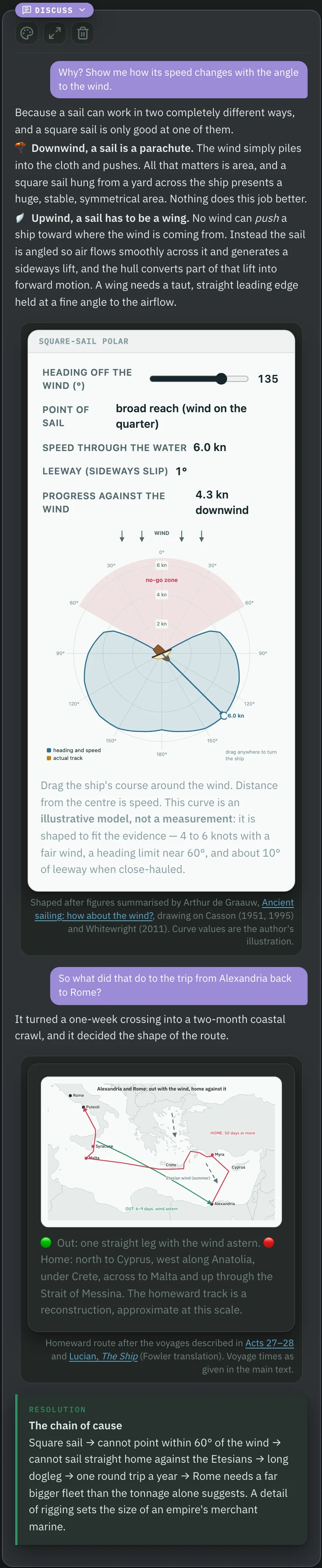
Every Define, Discuss and note is pinned to the map so you can revisit your detours later.
When a side question turns out to be a whole subject, open the card as its own journey, with its own map and sections, and its own cards inside it.
Pedagogue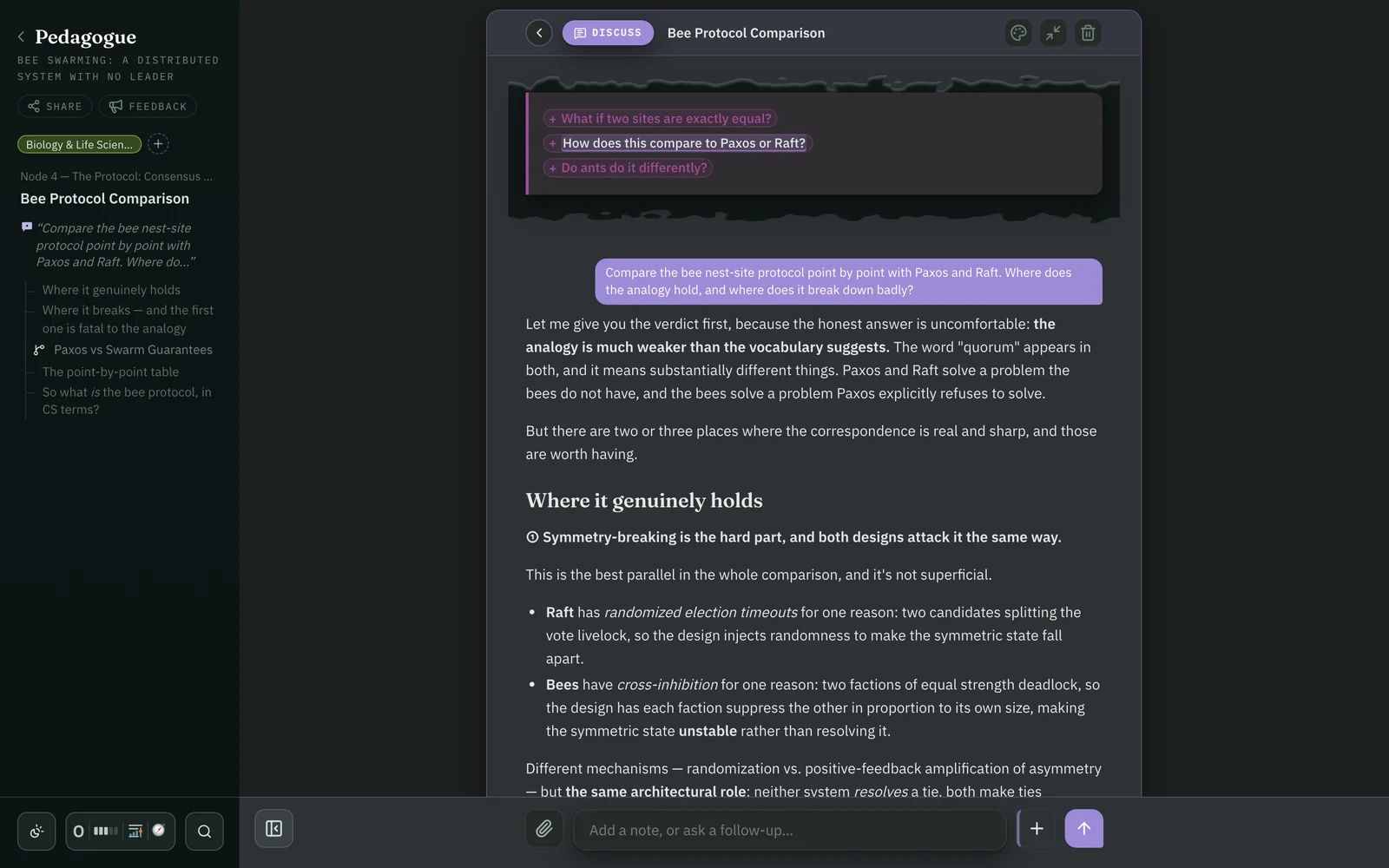
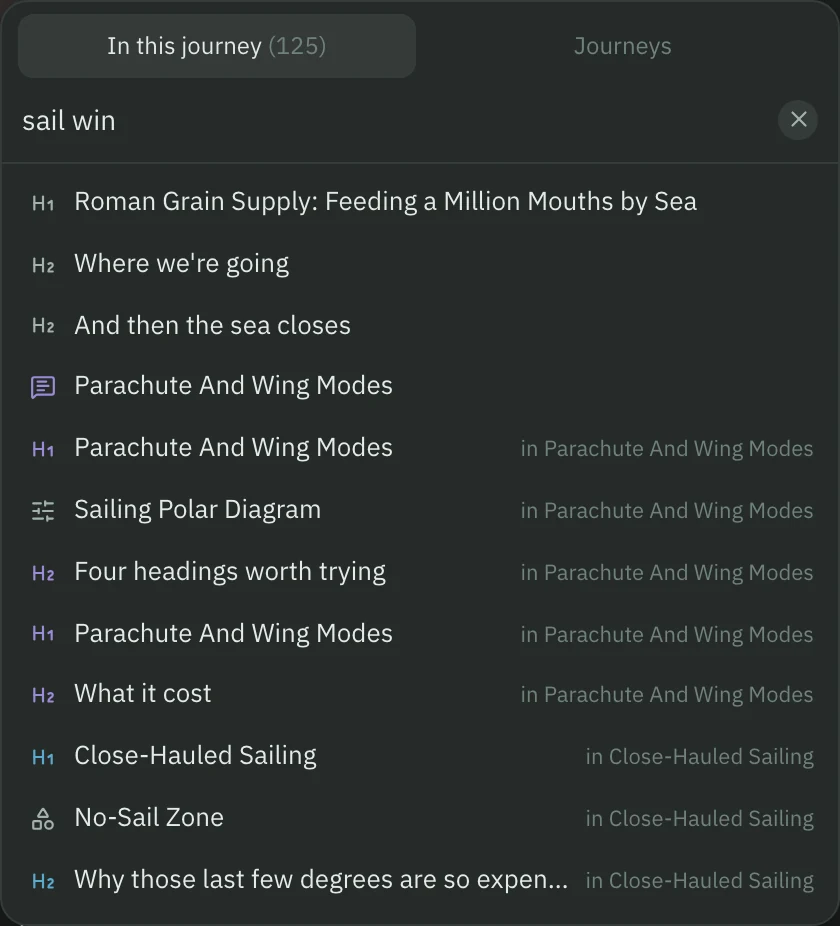
Find anything with built-in fuzzy search.
Around the lesson
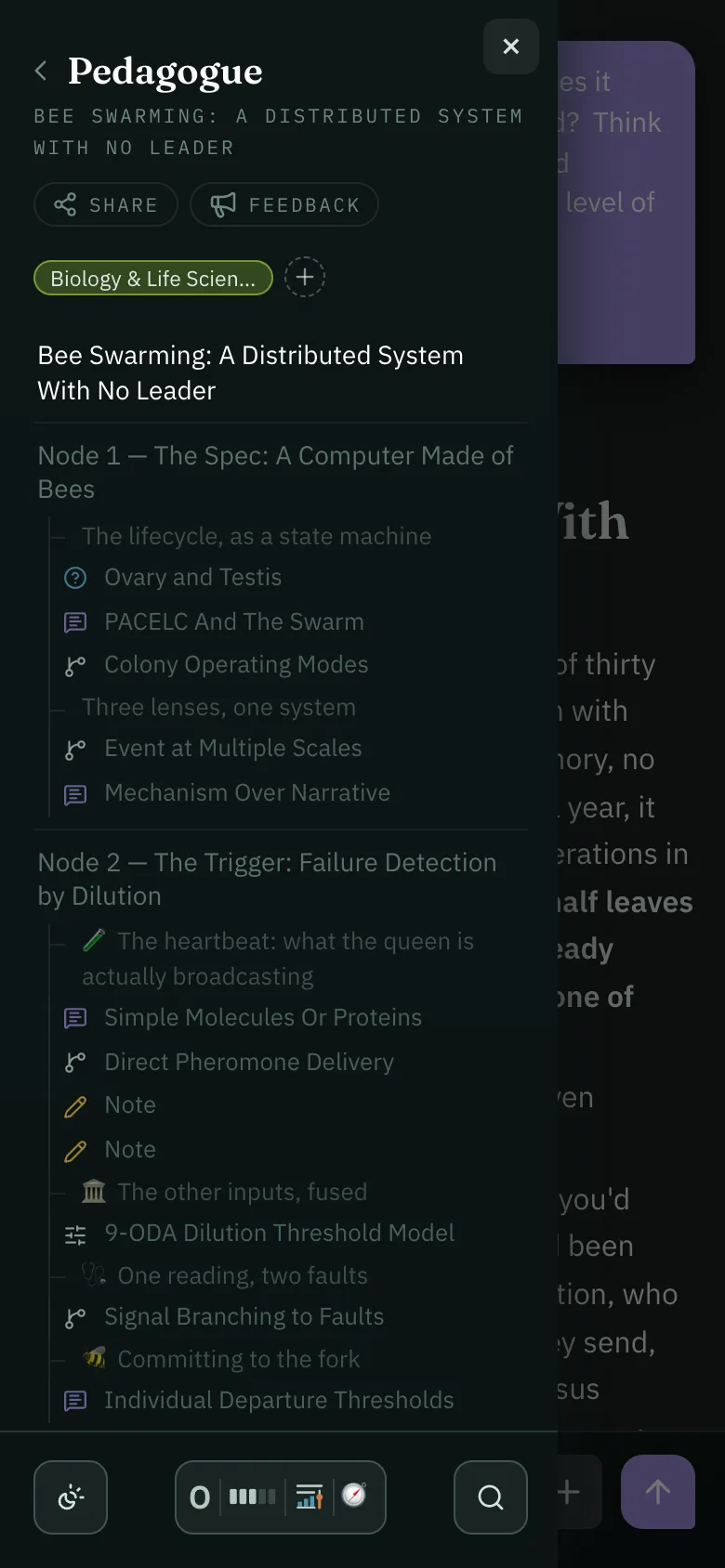
Stay organized with the Librarian, build custom learner profiles, and access Pedagogue on your phone.
Pedagogue runs using your local authenticated Claude Code.
Pick the model and how hard it thinks for each journey.
Your journeys live in folders with tags. The librarian is a second assistant that knows your whole library, not just what's on screen. Ask it what you've been learning, or ask it to tidy up.
Pedagogue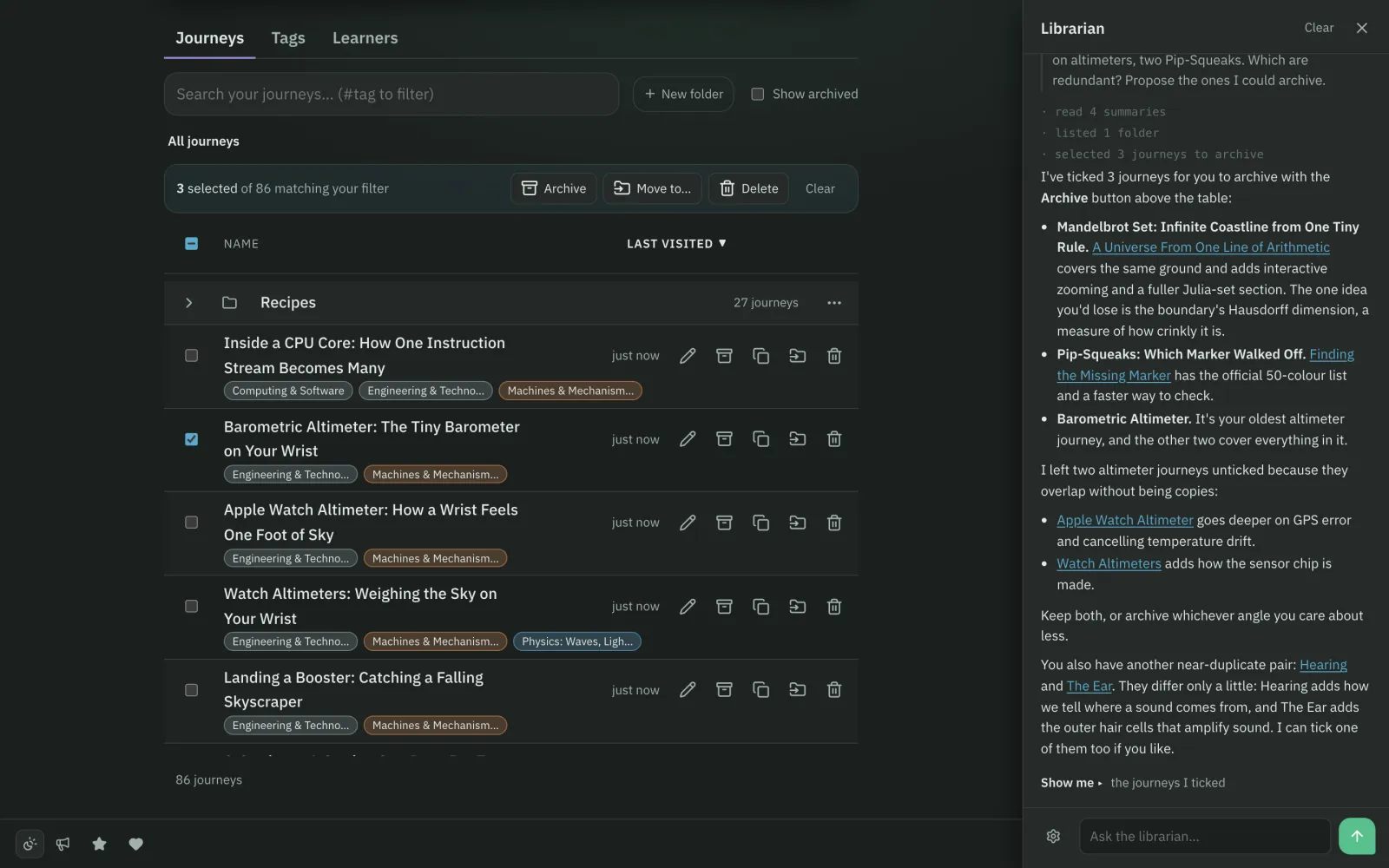
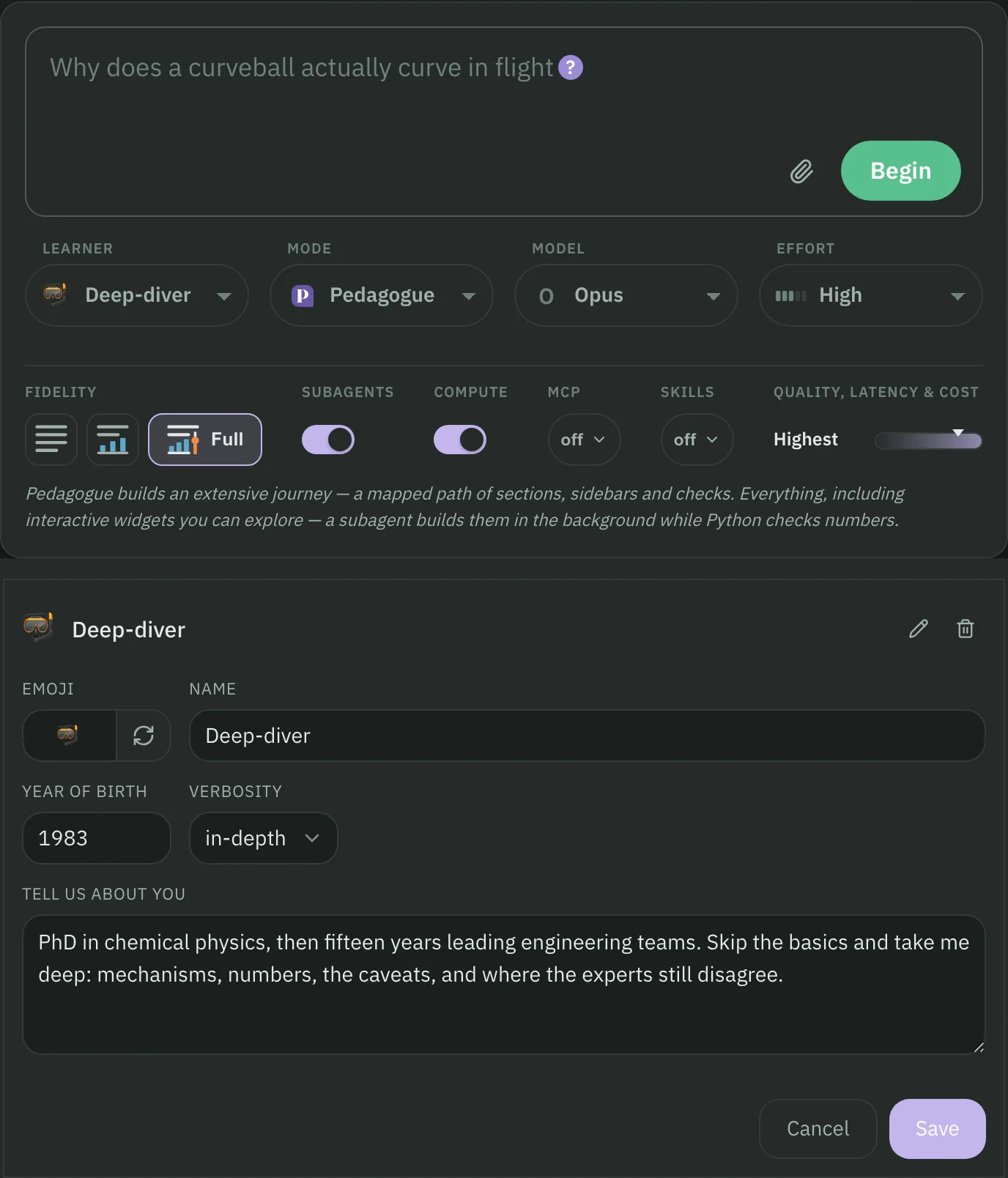
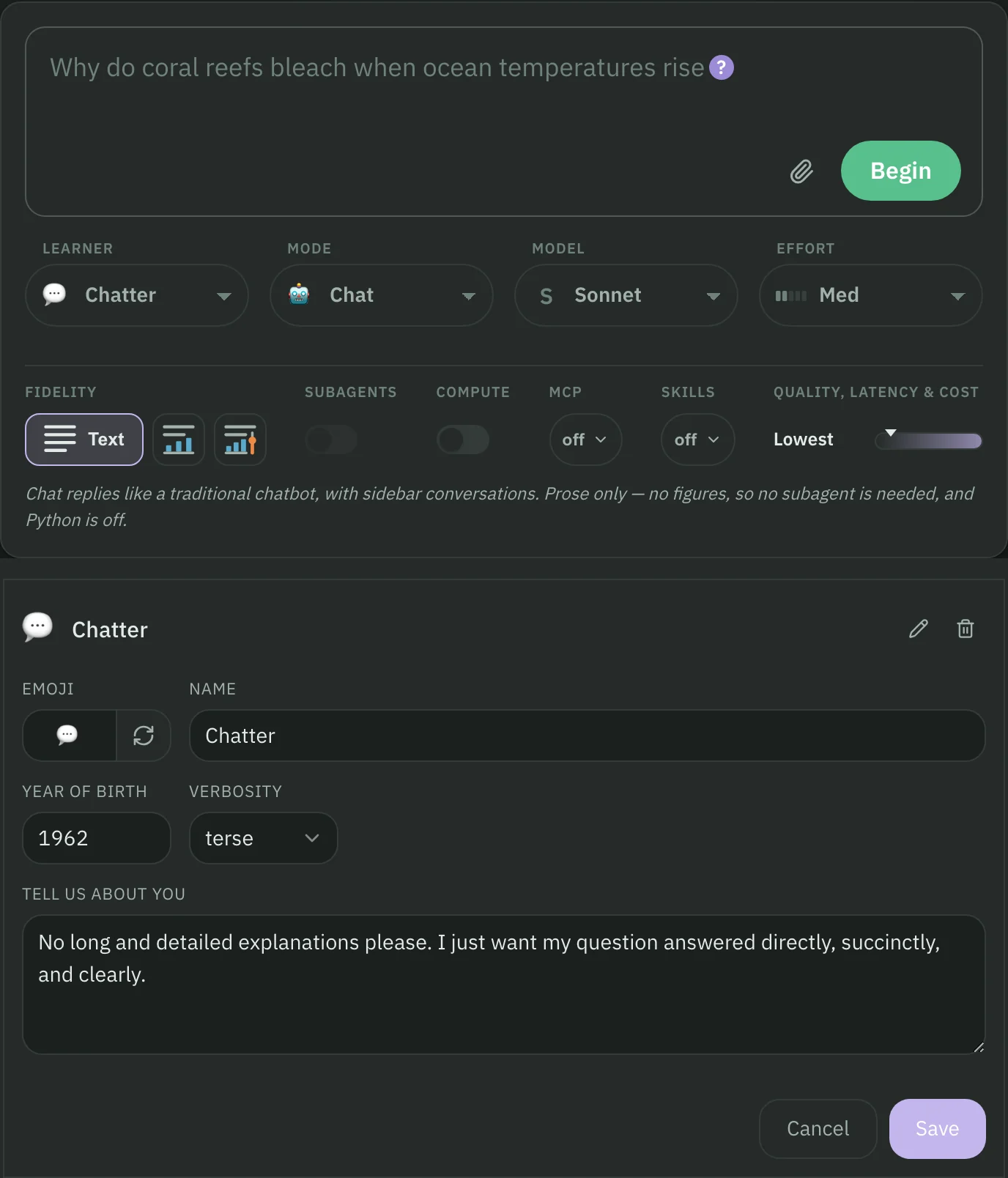
Pedagogue mode builds the full journey. Chat mode answers just what you asked, like a traditional chatbot, but can generate figures on demand and supports sidebar conversations.
Fidelity configures the content — choose from a traditional text-only experience, add static diagrams, or push all the way out to high fidelity interactive set-pieces.
Pedagogue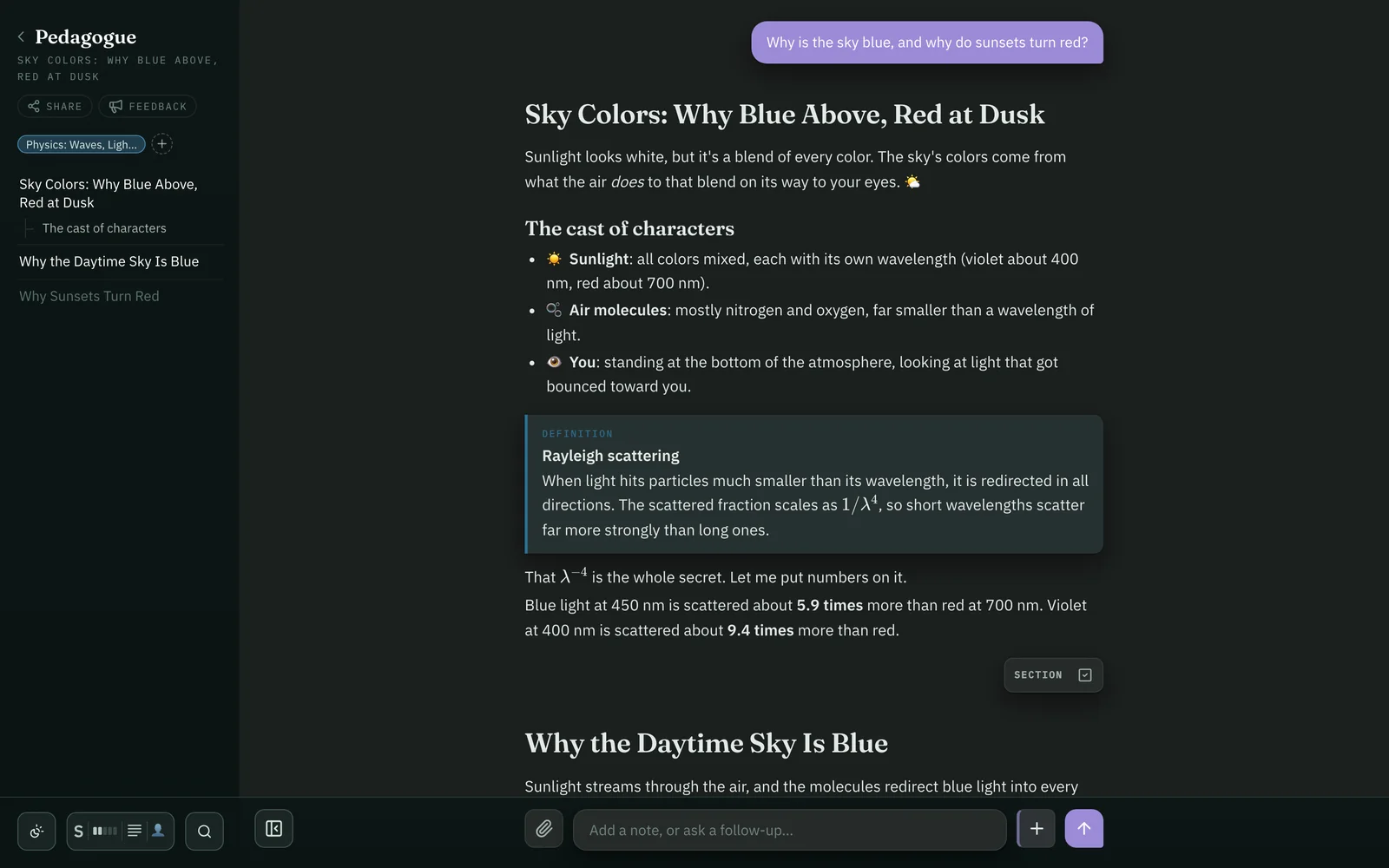
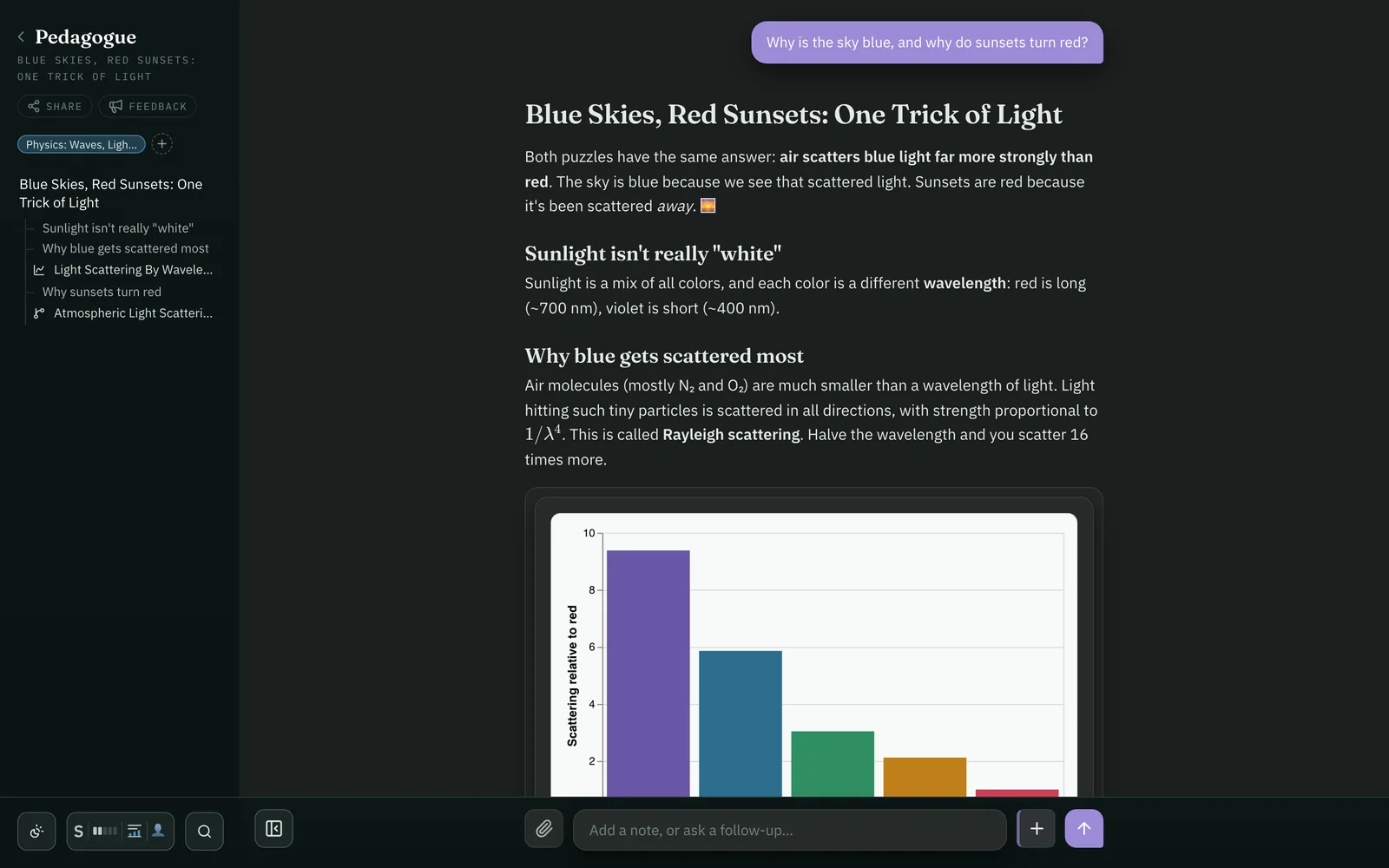
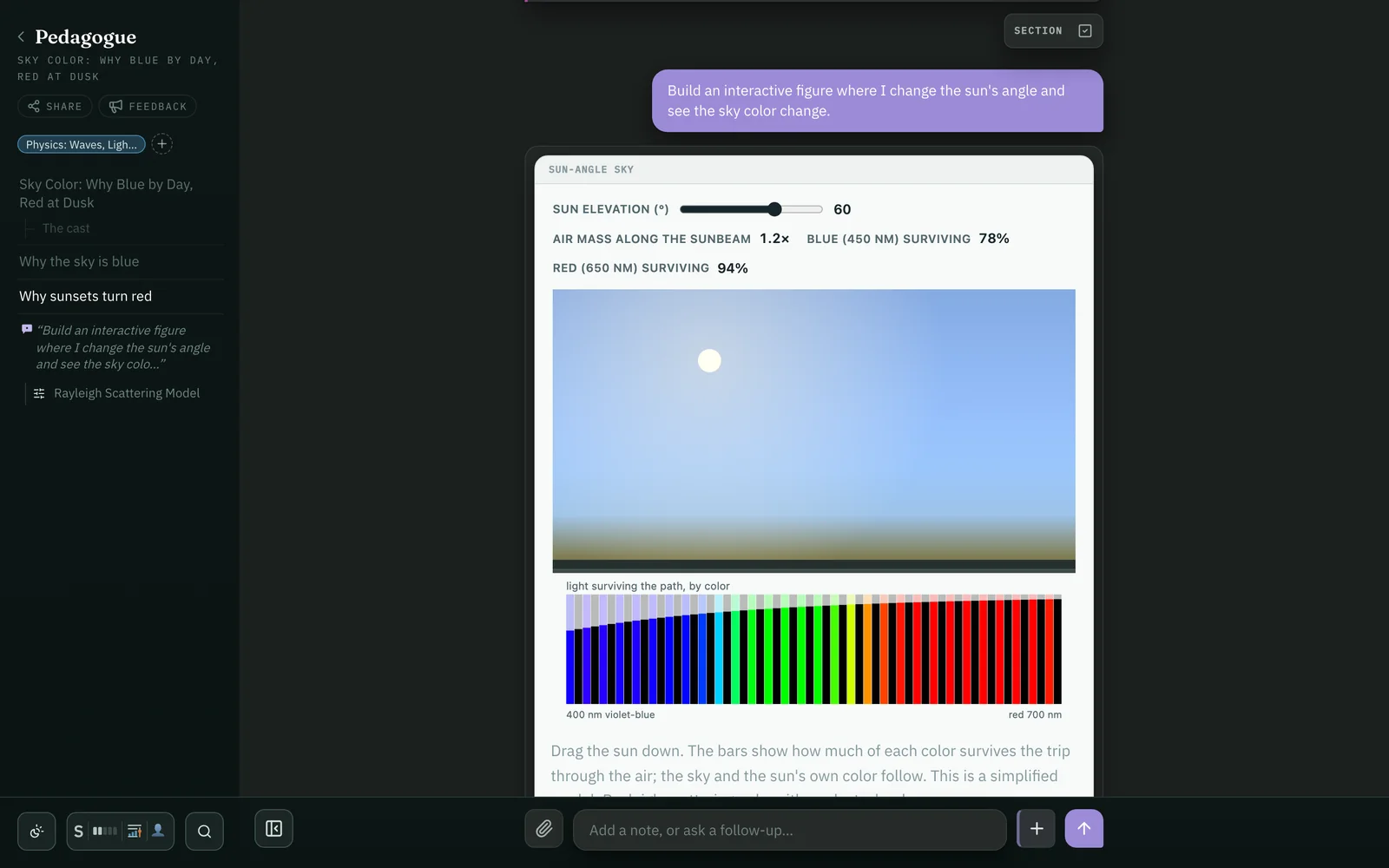
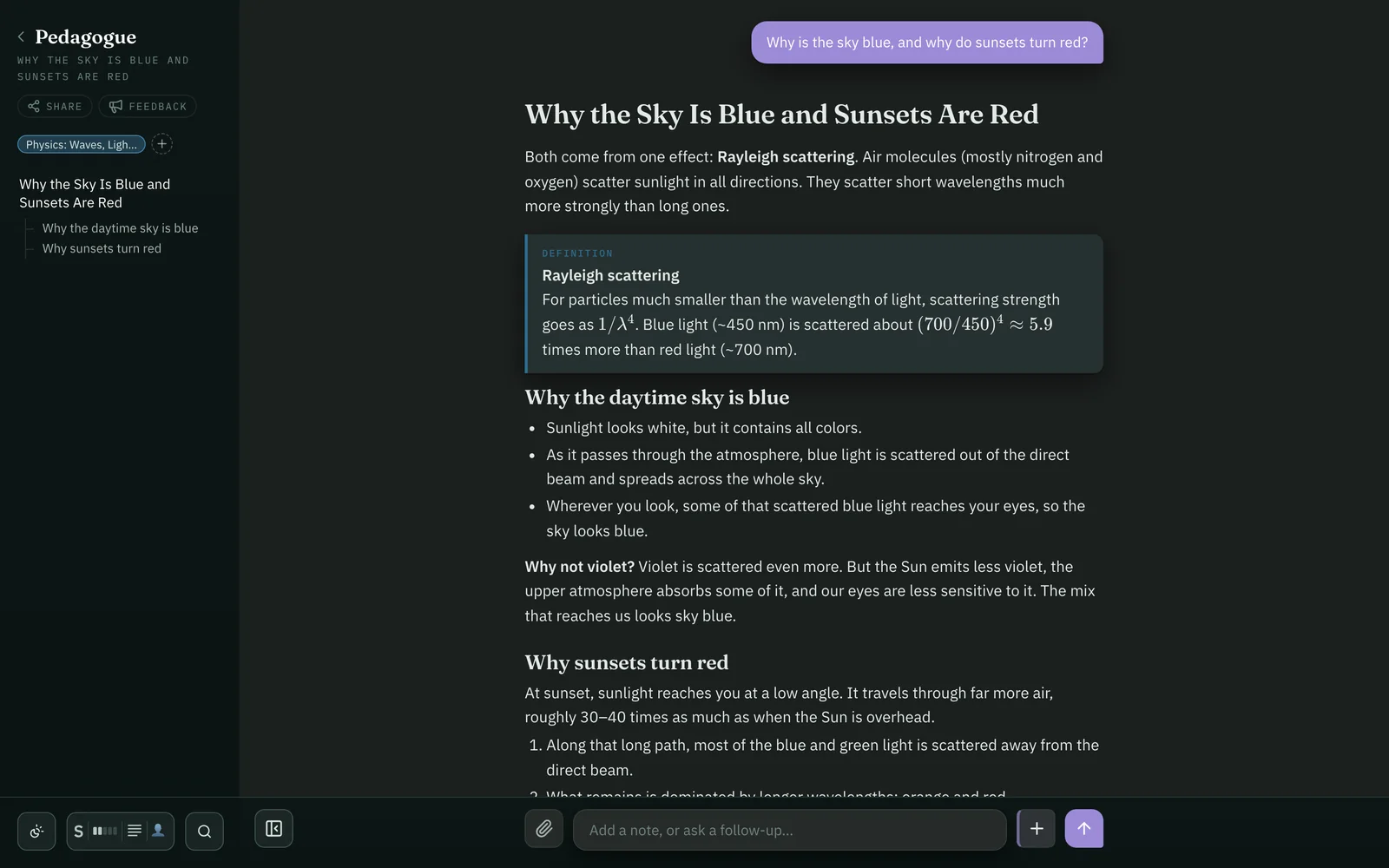
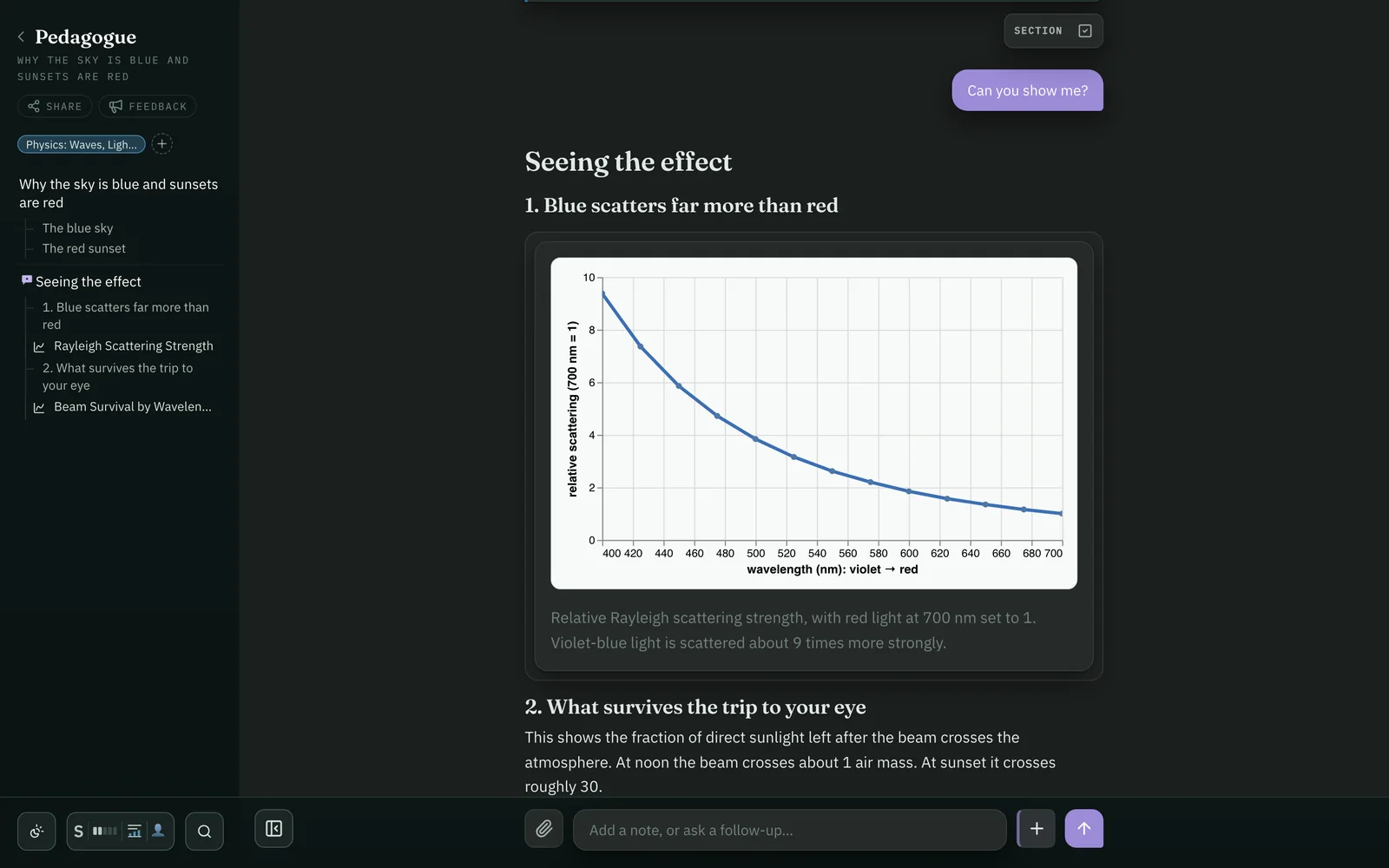
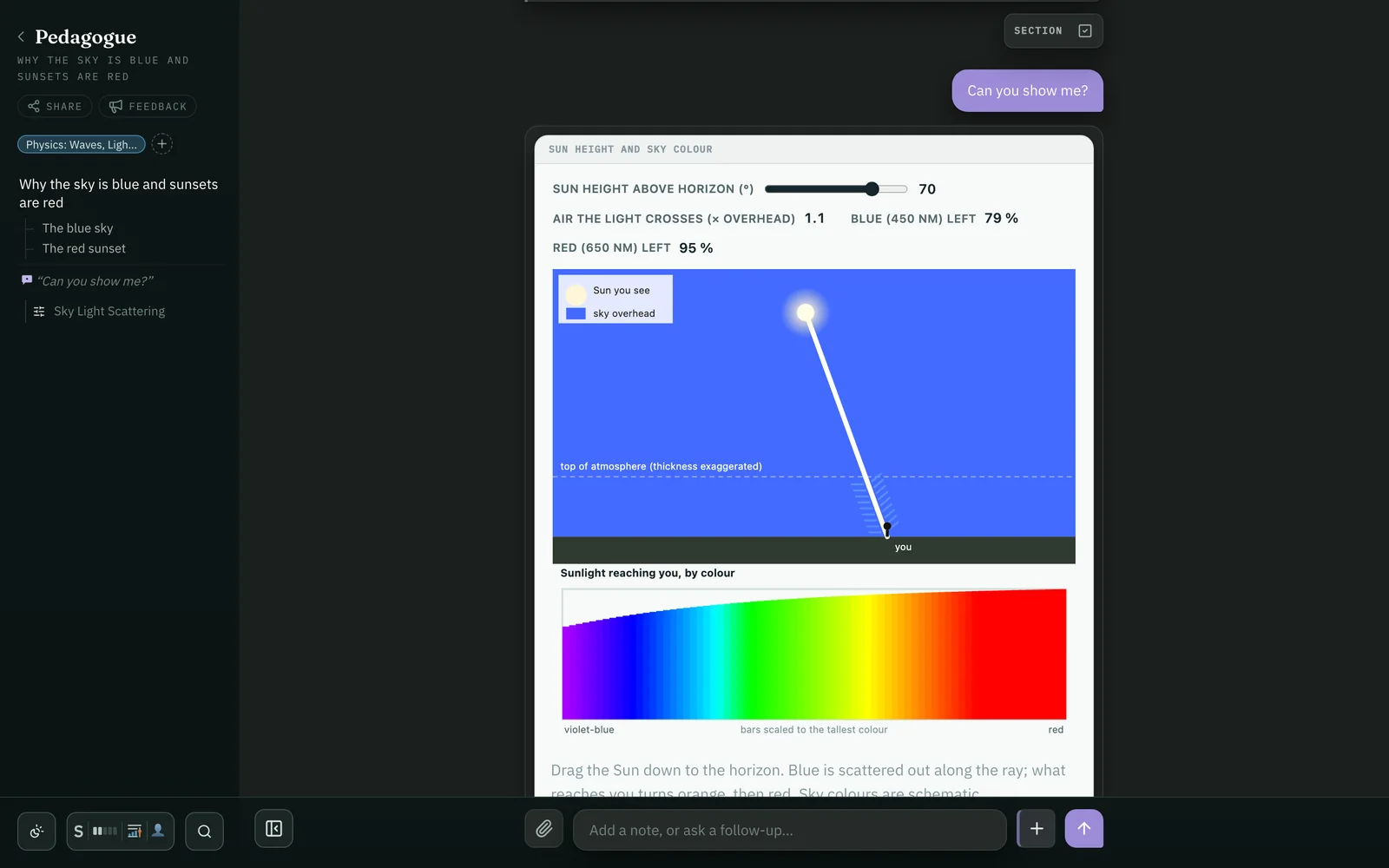
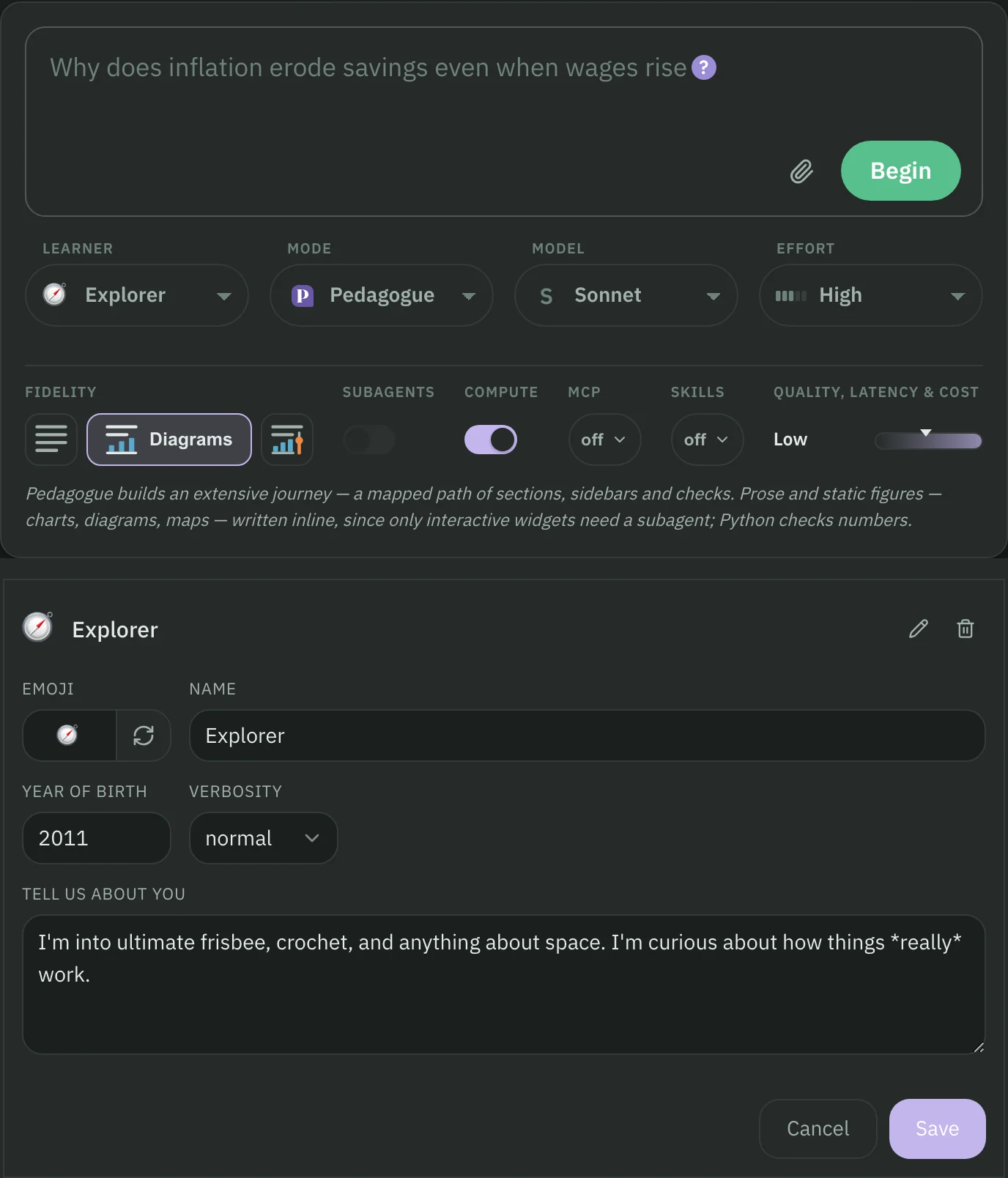
Set up as many as eight learners, then prompt each with a preferred learning style or point of emphasis. Learners remember your journey settings allowing you to quickly jump between preferred settings.
Three examples:
Pedagogue runs on your Mac where your journeys live and is reachable from your phone over Tailscale. There's no separate app: open the address in Safari and the whole journey comes with you, map and sidebars included.
Pedagogue is in private beta, by invitation, on the Mac.
Have an invite? Install the beta macOS 14 or later. Needs a working, authenticated Claude Code on your Mac.